Deck Builder in the Vail Valley
Chino's Remodel & Build is a deck builder for the Vail Valley, building and rebuilding decks from a sunny family deck in Eagle to a snow-loaded balcony deck in Vail. Edgar designs the framing for the county's snow loads, sets footings below frost depth and chooses decking that handles strong sun, deep snow and freeze-thaw winters.
Deck building for Vail Valley homes and weather
A deck in this valley has two jobs. In summer it is the best room in the house, with long evenings and views of the ridges. In winter it carries feet of snow, sometimes plus what slides off the roof above. A deck designed for a milder climate may not hold up here.
Edgar builds decks to handle both seasons. Down-valley in Eagle and Gypsum, more sun and warmer summers mean outdoor living space gets real use, and families want big decks with stairs to the yard. Up-valley in Vail and the upper parts of Avon and Edwards, decks face heavier snow and tighter sites. Each design starts with the conditions at that address.
Deck projects we build and rebuild
- New decks off a kitchen, living room or walkout basement
- Rebuilding aging decks with rotted joists, loose ledgers or failing posts
- Railings, including metal, cable and wood options that meet code
- Covered decks and roofs that keep a seating area clear of snow
- Stairs, landings and connecting walkways
- Pergolas and shade structures
- Deck board replacement and refinishing where the frame is still sound
Snow load, frost depth and how a mountain deck is framed
Two county numbers shape every deck. Eagle County Building Division sets roof and deck design snow loads from the 2016 Colorado Ground Snow Map or the 2016 Colorado Design Snow Loads. Joist size, beam size and post spacing all follow from that load, and a deck under a roof edge may need to handle more. The second number is frost depth: 48 inches unless a geotechnical report specifies otherwise. Footings go below that line so freeze-thaw cycles cannot lift and tilt the posts.
The ledger, where the deck attaches to the house, gets the most attention. A ledger that is poorly flashed lets water into the rim of the house, which causes rot in both the deck and the home. Edgar flashes ledgers carefully and uses hardware rated for outdoor use.
Snow management is part of good deck design. Where a roof sheds onto a deck, the framing and railings should account for snow sliding down and piling up, and sometimes a small roof over the door or snow guards on the main roof are the better fix. Owners in the upper valley often ask for a layout that keeps a clear path to the grill or hot tub without shoveling snow over the railing onto a walkway below.
Decking and railing materials for sun and snow
At this altitude, the sun is intense. Wood decking grays quickly and needs stain every few years to resist checking and splitting. Composite and PVC boards resist fading and need far less maintenance, though they can get hot in direct summer sun. Hardwood decking is very durable but costs more and is harder to work. For framing, pressure-treated lumber is standard, and some owners add a protective tape over joists to extend their life.
Railings should be strong enough for snow pushed against them and open enough to keep the view. Metal and cable railings shed snow easily. Wood railings match many mountain homes but need the same upkeep as wood decking.
What affects the cost of a deck
Deck cost typically depends on size, height off the ground, materials and site access. A tall deck on a slope needs bigger posts and more labor than a low deck on flat ground. Composite costs more up front than wood. Covered roofs, built-in lighting and complex stairs all add to the total. Our page on what drives remodeling cost in the Vail Valley explains these factors in more depth.
How a deck project runs
- Edgar visits, looks at sun, views, drainage and how you plan to use the deck.
- He designs the layout and framing, confirms materials and prepares a detailed estimate.
- Permit drawings are submitted, and HOA approval is requested where needed.
- Footings are dug and inspected, then framing, ledger flashing and decking.
- Railings, stairs and final details go in, followed by the final inspection.
Permits, HOAs and local deck rules
Building a new deck or rebuilding the structure usually needs a building permit. Towns like Vail, Avon, Minturn, Eagle and Gypsum handle their own permits, and unincorporated areas like Edwards and Eagle-Vail go through the Eagle County Building Division. Many HOAs also review deck materials, colors and railing styles. Edgar confirms both before building and handles the paperwork.
Deck building from Avon to Gypsum
We build decks in Avon, Edwards, Eagle and Gypsum, and repair them across the valley. If the deck is part of a bigger project, read about home additions or our general contractor work. For smaller problems like a loose railing or rotted stair, see home repair. Call (970) 471-5155 for a free estimate.
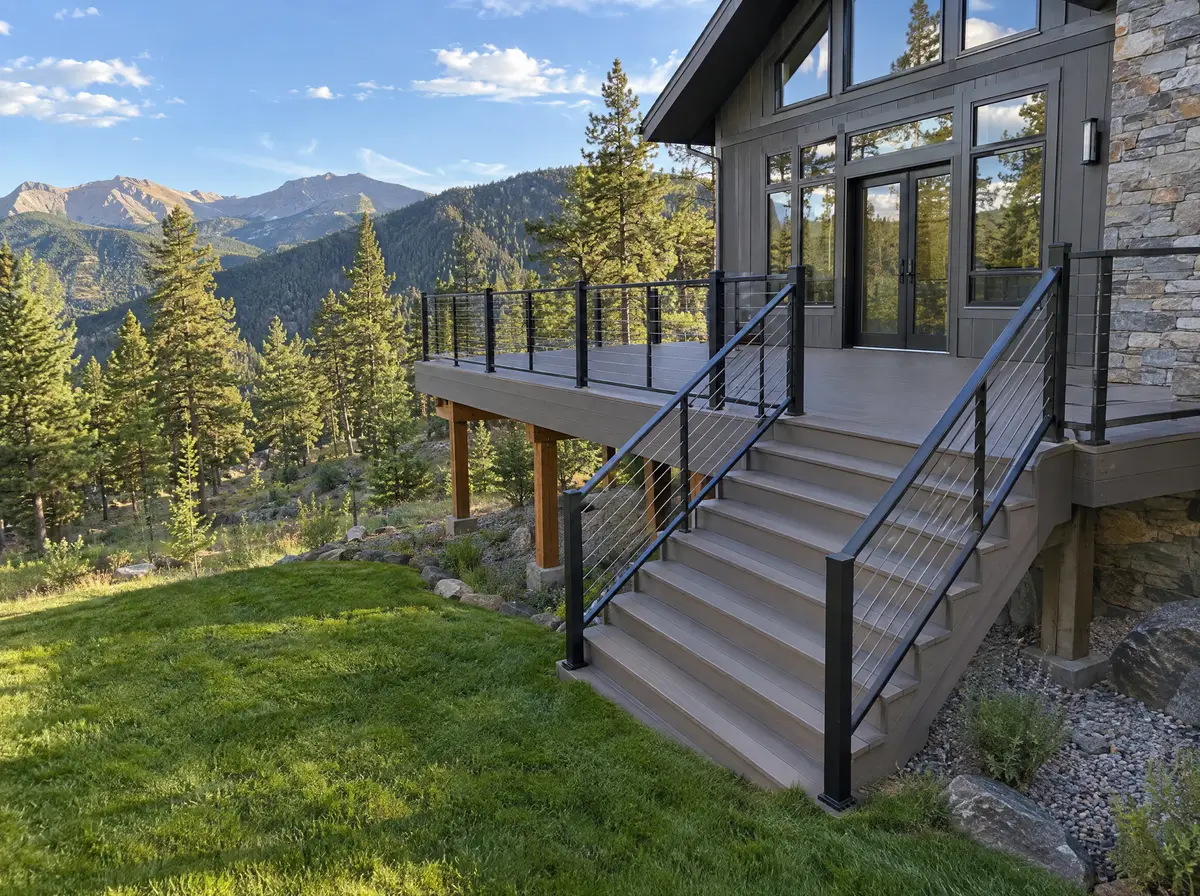
Example scene, not a photo of a Chino's job. Edgar's own work is on the projects page.
Deck Builder questions
How deep do deck footings need to be in Eagle County?
Does a deck need a permit in the Vail Valley?
Is composite or wood decking better for a mountain home?
Can you repair a deck instead of replacing it?
When is the best time to build a deck here?
Related services
Home Additions
Room additions and second-story pop-ups planned for snow load, frost depth and permits.Home Repair
Repairs for water damage, rot, failing windows, loose tile and winter wear on mountain homes.General Contractor
Additions, structural work and whole-house projects, with planning, permits and trades handled.
Tell Edgar about the job
Send a few details and the town you are in. Edgar calls you back to talk through scope, timing and the next step, and the estimate is free.
Monday to Friday, 7:00 am to 6:00 pm.